
Article: Artificial Intelligence and Copyright—What Now?

Photo Source: Negative Space
Since its release in November of 2022, the overwhelming explosion in popularity of OpenAI’s chatGPT served to mask the already growing effects of generative AI art and literature. Access to these powerful models has increased the potential for individuals and corporations to flood the world with new imagery and prose. The flood of new images poses the question of who owns the copyright for these images. The United States Copyright Office (USCO) has ruled on the subject, declaring that AI-generated images do not qualify for copyright protection.
Generative AI models such as chatGPT learn from billions of examples to predict the correct answers to questions, write essays, and even tell jokes. A number of companies offer models that can generate digital images based on simple prompts from the user—for example, OpenAI’s tool DALL-E2. The model’s name DALL-E comes from a mix of two names--the surrealist painter Salvador Dali and the Pixar robot, WALL-E. (lab.openai.com) For example, when asked to generate “A cubist painting of cats drinking champagne out of glasses,” DALL-E generated the following picture (lab.openAI.com 3.29.23)

Clearly not a cubist work of art, but DALL-E generated the above digital picture in about three seconds. Other companies, such as Midjourney (midjourney.org) or Stable Diffusion (stability.ai), offer models that also generate images.
Recently, the streaming company Netflix Japan came under fire from anime fans for using artificial intelligence to generate the backgrounds for a three-minute short trailer for their anime series The Dog and the Boy. According to Min Chen on Artnet, “On January 31, Netflix Japan revealed the short on Twitter as a joint animation outing by the streamer’s Anime Creators Base initiative, anime producer Wit Studio, and AI development company Rinna.” (news.artnet.com) The massive global success of anime stems partly from the beautiful artwork and careful details in each frame of these illustrated series and movies. The industry has resisted automation to preserve the artistic value of the genre. However, Netflix citing a dearth of animators to meet their demand has called upon generative AI to lighten the load for the artists making the illustrations. Anime fans called foul and sharply criticized Netflix and Wit Studio for the lack of artistic integrity.
In a move that acknowledges the creative contribution of artists, the US Copyright Office oversees the rights to own creative works and their uses. It issued a policy statement that denies copyright protection for AI-generated images from text prompts such as DALL-E and Midjourney. In an article titled “Not Today, HAL: Copyright Still Requires Human Input” in JDSupra, the authors clarify the USCOs stance with, “The USCO explained that the use of AI tools does not necessarily exclude work from copyright registration. The salient issue in such cases would be the extent of creative control the human author had over the work and its creative expression.” (jdsupra.com) The policy statement issued on March 16, 2023, clearly states that just prompting an AI to make an image lacks the creative spark essential for copyright protection.
The ever-expanding influence of generative artificial intelligence models such as chatGPT and DALL-E has opened the door for individuals and corporations to generate new text and images with a simple natural language statement. These tools can not only generate sentences, essays, pictures, and movies; they can do so in a specified style of a particular author or artist. For example, one can request a poem in the style of Edgar Allan Poe or a picture in the style of Rembrandt. Such images may not reach the level of art, but they can supercharge the output of an individual. For example, Netflix Japan received strong disapproval from its anime fanbase for using AI to generate the backgrounds for a short for The Dog and the Boy. The fans felt a lack of artistic integrity in the work, an essential element of the genre. Interestingly, the USCO issued a policy statement that denies copyright protection to images generated by AI from a human prompt. The statement calls out a lack of creative spark in AI-generated content essential to warrant copyright protection.
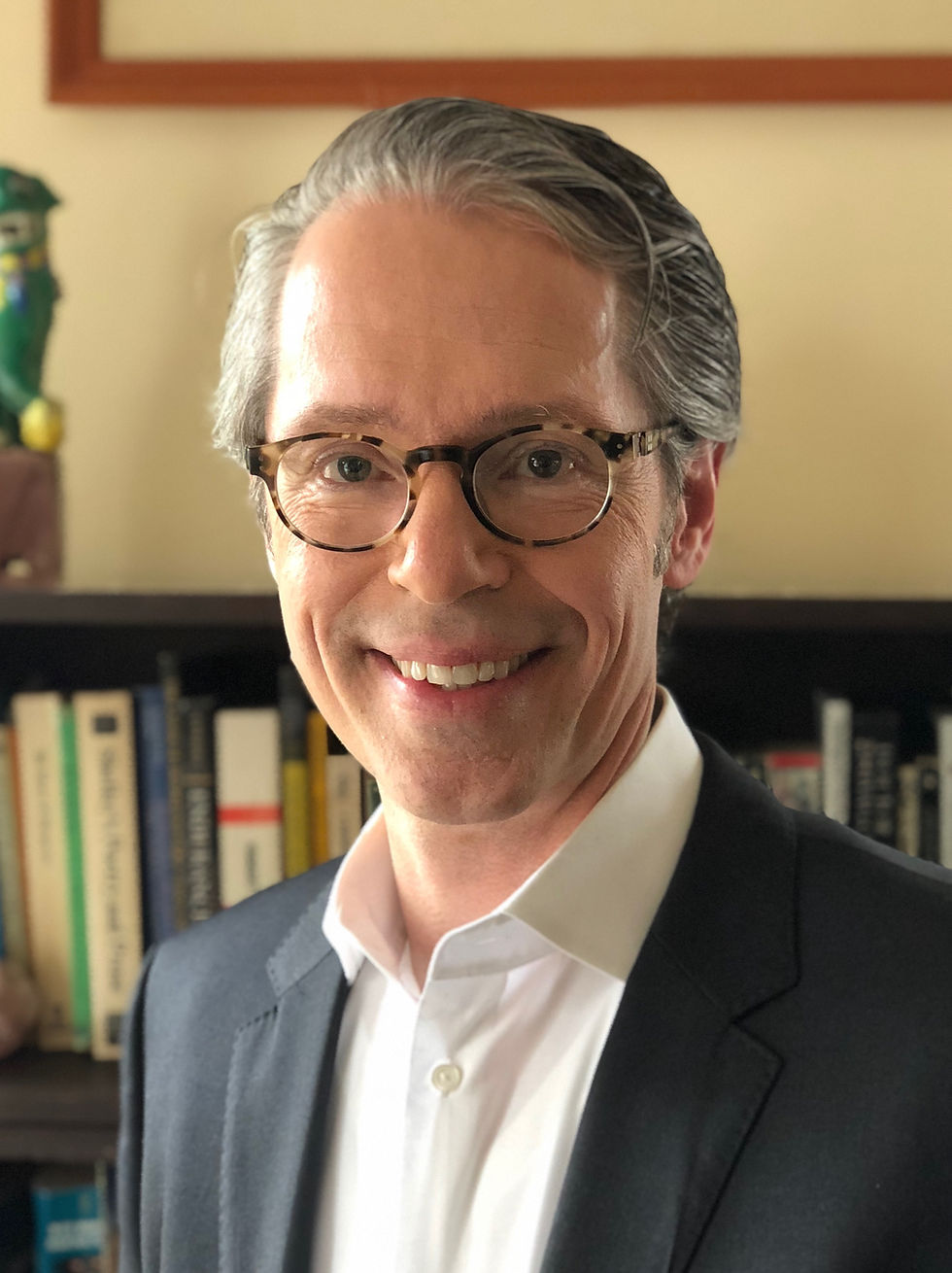
Dr. Smith’s career in scientific and information research spans the areas of bioinformatics, artificial intelligence, toxicology, and chemistry. He has published a number of peer-reviewed scientific papers. He has worked over the past seventeen years developing advanced analytics, machine learning, and knowledge management tools to enable research and support high-level decision making. Tim completed his Ph.D. in Toxicology at Cornell University and a Bachelor of Science in chemistry from the University of Washington.
You can buy his book on Amazon in paperback and in kindle format here.

Comments