
Article: Busting Wine Forgers with Chemistry and AI
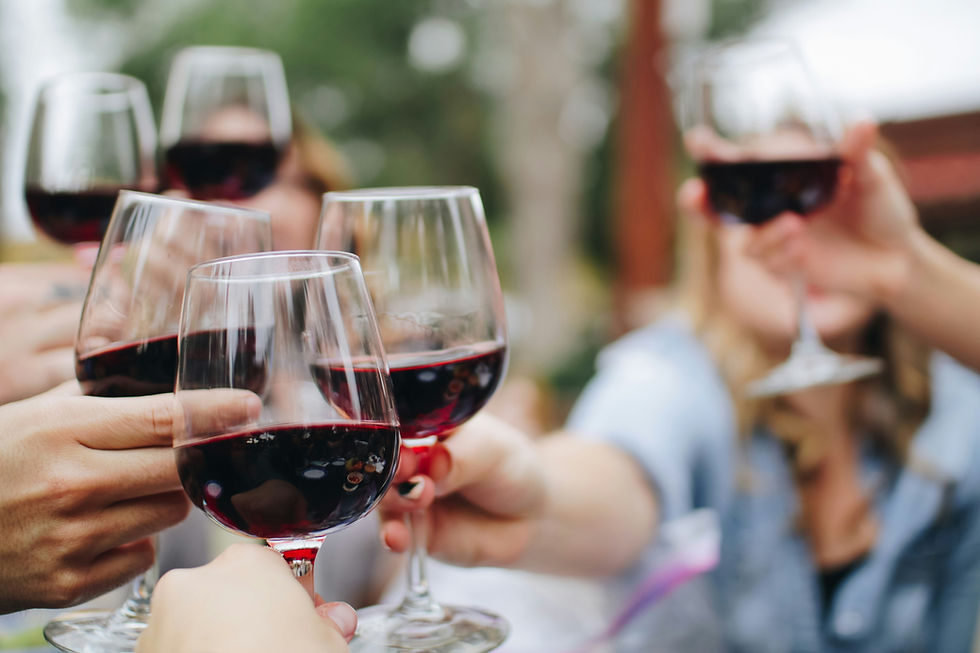
Photo Source: Unsplash
Scarcity creates value, and value inspires forgery. Both scarcity and forgery have hugely impacted the business of fine wine worldwide. Still, new AI tools combined with analytical chemistry now provide a more potent defense against the pernicious art of wine forgery. For wine enthusiasts, certain vineyards in Burgundy, Bordeaux, Napa Valley, and Tuscany represent the very pinnacle of wine perfection. For example, a tiny vineyard in Burgundy, France, called Domain de la Romanée-Conti, or DRC for short, produces arguably the finest pinot noir in the world. The vineyard covers only 4.4 acres and can produce only 500 cases of wine annually. Given such scarcity and renown, a 2021 Domain de la Romanée-Conti bottle costs $26,174 on pre-sale. (wine-searcher.com)
The monetary incentive to counterfeit notable wines proves irresistible given the massive profit possible if undetected. A notable wine counterfeiter, Rudy Kurniawan, also known as “Dr. Conti,” served seven years of a ten-year sentence in US federal prison for his massive wine counterfeiting operation conducted between 2004 and 2012. He managed through large auctions in the tens of millions of dollars to inject thousands of fake wines into the luxury wine market. (daily.sevenfifty.com) He eventually made a few mistakes that got him on the FBI’s radar, such as offering for sale more magnums of Château Lafleur than records showed had been made by the winery, and he sold another wine from a vintage that occurred before the founding of the winery. These mistakes caught the eyes of several wine merchants, leading to an FBI raid. The court eventually found Dr. Conti guilty of wire, wine, and mail fraud, and he has since been deported to his native Indonesia.
During the pandemic, wine fraud increased and now affects all levels of the wine industry due to the increase in online purchases, depersonalizing the merchant-client relationship, and the lack of travel for merchants to visit the wineries themselves. Merchants have developed techniques to identify forged labels and bottles, but until now, proving the origin of a wine and its vintage relied on human experts.
Recently, a group of researchers combined artificial intelligence and analytical chemistry to accurately determine the vineyard of origin wines from different chateaux in Bordeaux, France. Titled “Predicting Bordeaux red wine origins and vintages from raw gas chromatograms” and published in the journal Communications Chemistry, the authors described using a technique known as gas chromatography-mass spectrometry or GCMS to examine wines from different vineyards and vintages. (nature.com) GCMS combines two methods to explore the complex mix of chemicals in wine. The GC part uses an oven and a long tube to separate chemicals in a mixture such as wine. The wine gets injected into the GC machine at the beginning of the tube. The lining of the tube is stickier for some chemicals than others. By blowing air through the tube and raising the temperature, the mixture separates so that the chemicals come out of the long tube one by one and are no longer mixed up. Once the chemicals emerge from the long tube, they go into another instrument called a mass spectrometer or MS. The MS breaks the chemicals into pieces, and as the pieces fly through a strong magnetic field into a detector that can accurately determine the original chemical structure of each molecule. The type and amount of different chemicals in the wine create a unique pattern for different vineyards. Artificial intelligence helped to identify the distinctive patterns for each vineyard. After looking at 12 vintages from 7 estates, the authors reported that they could completely identify each estate with 100% accuracy and guess the vintage 50% of the time.
The remarkable accuracy of the AI and GCMS for identifying individual Bordeaux estates suggests that all the world’s vineyards could eventually have their own unique GCMS signatures in a global database. With such information, wine merchants who suspect a batch of wine may be fraudulent could submit a sample for analysis and comparison against the database, just as fingerprints help identify human individuals. Currently, most GCMS machines take up quite a bit of space, but the world’s smallest portable GCMS, the Torion T-9, weighs 32 pounds and takes up less space than two loaves of bread. (quantanalytica.com) We have a long way to go before a GCMS can fit in a smartphone, but with a portable GSMS, merchants, and clients can check to see if the label truly matches the wine in the bottle.

Dr. Smith’s career in scientific and information research spans the areas of bioinformatics, artificial intelligence, toxicology, and chemistry. He has published a number of peer-reviewed scientific papers. He has worked over the past seventeen years developing advanced analytics, machine learning, and knowledge management tools to enable research and support high-level decision making. Tim completed his Ph.D. in Toxicology at Cornell University and a Bachelor of Science in chemistry from the University of Washington.
You can buy his book on Amazon in paperback and in kindle format here.

Comments