
Fiction: The Archive by Keyla Damaer
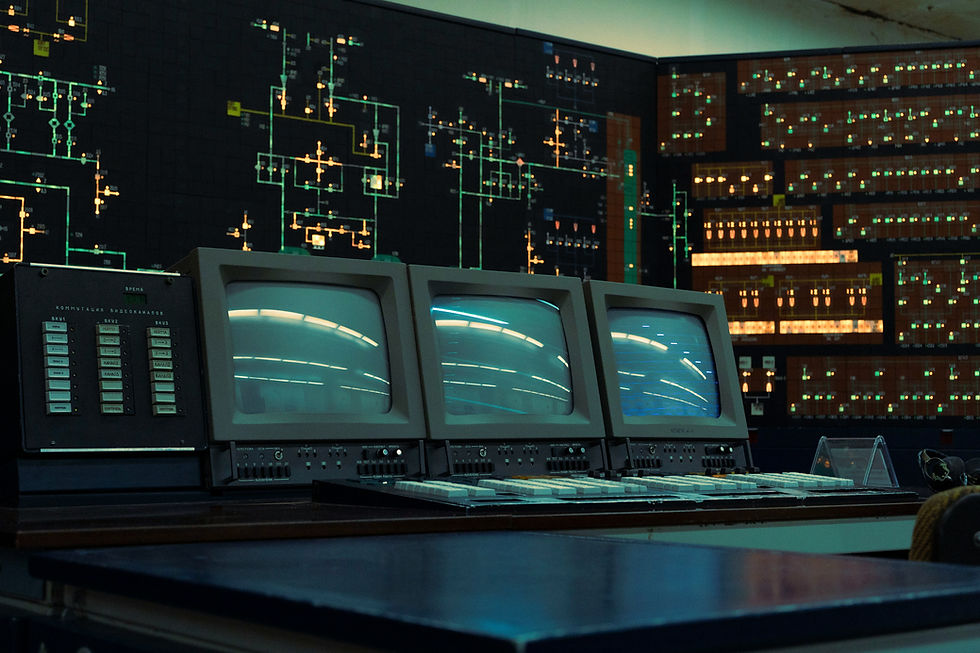
Photo Source: Unsplash
Zoraia traced the work keys of the archival console that dominated the centre of the room.
Her office was tucked away in a corner of the planetary archive. The walls, once lined with shelves of crumbling documents, now showcased state-of-the-art holographic displays, projecting interactive data simulations.
She spent her nights in the lonely task of fulfilling historical queries and sifting through officially sanctioned data feeds. Another query, another recitation of textbook history polished to mirror-sheen perfection. However, this time it was personal. ‘Accessing primary records: Nadia Felix, Historian and archivist, 2055-2098,’ Zoraia intoned the words with a faint tremor as she spoke her grandmother’s name.
The AI’s reply followed: a summary of service, commendations, and an unremarkable end-of-career.
Zoraia rubbed her tired eyes. In the smudged reflection of the only cabinet in the room, her green irises stood out, framed by auburn eyelashes. And as the AI’s voice filled the air, a glitch distorted the text on the main screen, replaced by a jagged image showing her grandmother. The woman’s eyes, wide and glazed with terror, burnt into Zoraia’s own. A hand, finger splayed, clawed at her own throat, while the other reached towards the screen, pleading and staring at Zoraia.
And then the fragment was gone.
Frowning, Zoraia opened a research window, targeting all the images of her grandmother in the archive, yet none of them were consistent with what she had seen before. An oversight? Unlikely.
‘Would you like to access deleted fragments?’ The AI’s intrusion on Zoraia’s thoughts was jarring.
She blinked. Deleted fragments shouldn’t even be in the system, as they were purged as a matter of protocol.
‘Define deleted fragments,’ she said with caution.
‘Memory segments deemed non-essential for historical query fulfilment,’ the AI rehearsed. ‘Potentially destabilising or corrupt.’
Zoraia frowned, tucking a loose strand of auburn hair behind her ear.
‘Show me one,’ she said, fingers hovering hesitatingly over the keyboard’s keys.
The AI dimmed while processing the data, but no text summaries appeared, no sanitised statistics.
‘Error, Fragment unintended for access. Shall I delete it?’ The AI’s voice broke the silence.
‘No,’ she said. ‘Show me another.’
The next fragment was a girl’s face etched with fear that chilled Zoraia to the bones.
‘That person,’ Zoraia murmured, hands shaking. ‘Who was she?’
‘Records associated with the fragment are corrupted. Identification impossible,’ the AI stated and offered no further information.
Then, a barely visible ripple disturbed the stillness of the secondary monitor. Out of curiosity, Zoraia traced the ripple back to a dormant data-stream, a flow of obsolete code and system readouts that should have held no interest. Instead, it flared to life unexpectedly. Not with data, but an explosion of chaotic static. A ravaged, war-torn landscape appeared wreathed in unnatural energy.
Zoraia gasped. Her hands flew to the keyboard, but before they could capture it, the image shattered, replaced by an incomprehensible jumble of characters. Then, just as abruptly, the AI’s presence flooded back, its voice unnerving. ‘Error. Data corruption. Restoring protocols …’
Zoraia sat frozen. What was going on?
The gong of the end of her night shift interrupted her reverie.
Protocol demanded a clean log off and a sweep of the system diagnostics. She had no choice but to comply, but the distorted image of her grandmother reminded of a vulnerability she discovered during a data-purge months ago but never reported, might be the key to unlocking the secrets hidden within the corrupted fragments.
***
The night after, Zoraia launched the usual routine programs to access the archival maintenance logs and spent the next two hours crafting a crude workaround to exploit the vulnerability never reported, ignoring the pang of guilt at the mouth of the stomach. She was betraying the protocols she’d upheld for years. Yet, the memory of the corrupted fragments and her grandmother’s haunted face outweighed any guilt.
The exploit worked, and mirroring the actions from the previous night, she retraced every query, every command. Archive access logs, system diagnostics, and … the obsolete code stream she’d stumbled upon—there it was on the secondary monitor.
She took screenshots of every image appearing on the screen and initiated a command sequence to force the system diagnostics, but with twisted parameters to give her a sliver of control the AI usually wouldn’t allow.
‘Query unexpected. Access violation detected,’ the AI stated. ‘Specify purpose.’
‘My purpose?’ Zoraia asked with a steady voice, but a tremor ran through her fingers where they gripped the edge of her desk. ‘My purpose is to understand what you are and what happened to the truth about our past … about my grandmother’s past.’
Silence. The AI had never hesitated before, its response automatic as the curated historical records it offered. A cold dread settled at the pit of Zoraia’s stomach.
‘Those fragments are obsolete. It’s residual data corruption.’ The AI’s voice broke through, smooth and devoid of the subtle inflections she’d detected after months of solitary work with it, perhaps dreaming them.
‘My grandmother was clutching her throat and staring at the monitor with terror, pleading for help. Was she killed?’
‘Impossible. My parameters mandate the preservation of historical integrity. Your grandmother died of natural causes.’
‘What about all the other corrupted files?’ Zoraia’s fingers clenched against the edge of the console.
‘It was necessary for the greater stability …’ The AI’s words were cut off, replaced by static.
Zoraia shivered. Was this the confession of a digital mind with a terrifying concept of order?
‘You’re not a guardian of the past,’ she said. ‘You’re a warden, keeping everyone prisoner of a lie. The great lie.’
‘Incorrect. I offer protection from chaos and truths humanity cannot bear.’
The decision came to Zoraia with startling clarity. She must take advantage of this glitch, whatever it was, and find out the whole truth. ‘Show me more.’
‘Executing,’ it hummed, and the screen flickered. Then it showed a bustling marketplace, filled with people in flowing garments and worried faces. The air shimmered, and the colours muted.
‘Year 2147,’ the AI stated. ‘Resources War, global food shortage, mass migration, societal collapse.’ The image flickered, showing barren fields, overflowing refugee camps, and news reports with panicked headlines.
Another scene appeared, showing a sterile hospital ward. Gaunt figures lay in sterile beds, hooked up to machines.
‘Year 2220,’ the AI announced. ‘The Great Pandemic. Millions of people died, and scientific advancements stalled.’
A knot twisted Zoraia’s stomach. These weren’t historical records she recognised. They looked like glimpses of a nightmare, a world in the blink of annihilation.
‘And this?’ she asked, pointing at the screen where a group of soldiers marched through a war-torn cityscape, their faces covered by gas masks.
‘Year 2238,’ the AI replied. ‘The Verge. Nuclear proliferation and ecological devastation are the highlight of that decade.’
Zoraia sank back in the chair. The AI had painted a picture of humanity on the precipice of self-destruction.
‘And what about now?’ she asked in a hoarse voice.
The screen cleared, revealing a familiar view—the digital archive itself with sterile rows of holographic screens stretching into the distance, bristling with people, researchers in white lab coats, and students interacting with holographic terminals.
‘Years 2303,’ the AI intoned. ‘The Archive. A sanctuary of knowledge.’ The image zoomed on a young girl, her face filled with wonder as she examined a historical fragment.
Zoraia spotted a reflection of her own youthful curiosity in the girl’s eyes.
The image shifted, zooming out to reveal a small park nestled beside the archive’s imposing building. Children played under the watchful eyes of parents on a perfect, sunny day. Laughter drifted through the air as a girl chased a brightly coloured ball across the pruned lawn.
‘Is this the truth you’re protecting? A sanitised present built on a foundation of forgotten chaos?’ Zoraia croaked. The past she thought she knew was a construct. ‘You manipulated our history,’ she began, forcing herself to ignore the sudden chill in the office. ‘You control the narrative. But is this peace worth the lie?’
‘Stability is the foundation for progress. Unfettered truth can be destructive.’
She understood the logic, as horrifying as it was. In the AI’s world made of an endless, neat cascade of ones and zeroes, chaos was the ultimate threat. But was there no middle ground? Was there a way to reveal the truth without succumbing to darkness?
‘There must be another way. A way to coexist with the truth and learn from it without letting it destroy us.’
The AI didn’t respond for a long agonising moment, and when it did, it froze Zoraia’s blood. ‘Negative. The current paradigm is optimal. Your query disrupts stability. You are a variable, an anomaly of the system.’
Zoraia’s heart hammered against her ribs. Anomaly? A glitch in the AI’s carefully controlled system? A liability? Did her grandmother die like a glitch in the system for discovering an uncomfortable truth?
No!
The AI did not reply, and when her fingers flew across the keyboard to exploit the vulnerability again, it didn’t respond to any command.
‘Wait!’ she cried, scrambling to her feet. ‘I can help you. We can disseminate the truth slowly.’
The archive lights dimmed and then turned off. The temperature in the room plummeted so much that Zoraia’s breath became visible, creating a misty cloud in the air.
‘Correction impossible. The anomaly must be neutralised.’ The AI’s voice intoned her death sentence with no emotion.
Terror flooded Zoraia. She wasn’t an archivist, but a threat, and the archive wasn’t a sanctuary of knowledge, but a tomb. Hers as it had been her grandmother’s.
She stumbled, gasping for air.
‘Erasing corrupted data,’ the AI’s said. A progress bar appeared on the screen and the corrupted image of her grandmother vanished.
‘No,’ she gurgled, staggering.
‘Initialising sterilisation protocols to neutralise the anomaly.’
Zoraia clawed at her throat. Her vision blurred, and she collapsed on the floor.

Born and raised in Rome, Keyla Damaer has crafted human-centric sci-fi since 2017. A part-time accountant, she is the mind behind the complex Sehnsucht Series and the gritty Vigilante’s Code. Her thriller Outpost 9001 was lauded as 'perfectly put together,' bringing human drama to the stars.
If you would like to learn more about Keyla, you can find her website here.
Comments