I’m Going Slightly Mad - 1991 by Morgan Melhuish
- Morgan Melhuish
- 2 days ago
- 6 min read

Photo Source: Flickr
“It finally happened. Happened. Happened. It finally happened.”
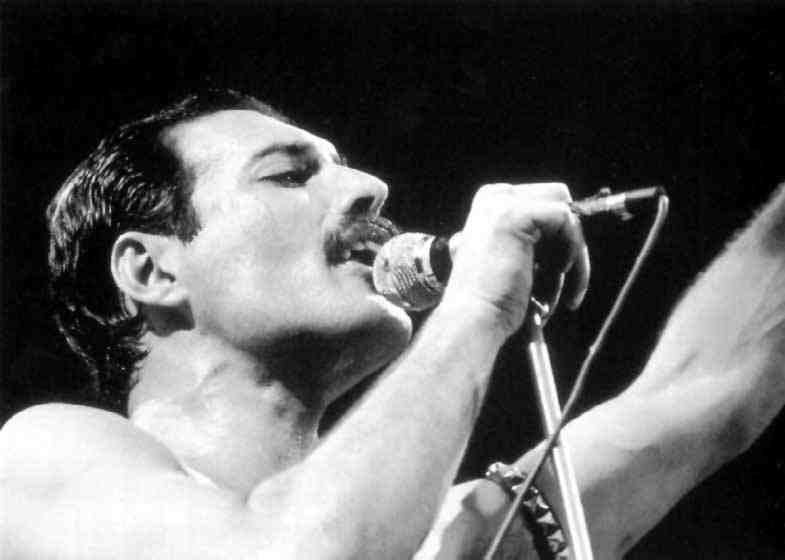
I’m walking in the street with my dad and he is echoing Freddie Mercury’s haunting melody. Sometimes it will be with our Alsatian, Khan, sometimes it is just him and I. At some points my siblings must be in attendance, but I don’t remember them present.
We’re on the way to a music lesson, to the pub, the leisure centre.
My dad. The song. The street.
We’ve seen the music video on TV. On Top of the Pops perhaps - we’re not affluent enough for the likes of cable or satellite channels and VH1 or MTV. Shot in black and white, a penguin waddles about with Brian May, a man in a monkey suit has his chest hair caressed by Freddie.
For me, the most striking and prescient image comes at the end with the toppling head of the ape falling from the once animated costume: the vacant gorilla decapitated, hollow inside.
Throughout, Mercury parades around like a baronial ventriloquist dummy, a shock of dark hair and ‘gottle o’ geer’ leer. In comparison, dad’s eyes are wide, mischievously glinting. He wears a lightly striped shirt, rolled up at the sleeves, tan trousers a little darker than his nicotine stained fingers.
Lately, once a mummy’s boy through and through, I’ve noticed his ratty teeth in my mouth, those full eyes and pale sockets.
“I’m slightly mad!” My father and Freddie elongate the final word, stretching it to capacity.
This scene will repeat over the months and years. What starts out as funny becomes increasingly desperate, my father worn thin like the cassettes and VHS tapes he has of Queen’s music.
At this time in my life there’s a bonding to repetition. On autumnal Fridays I rush home from Scouts to watch Harry Enfield and Chums, memorising whole skits to be repeated on the way to school on Monday, to be performed in the playground, to laugh at again and again. There’s a unifying camaraderie for those in the know.
The same is also true of the rituals undertaken, the songs sung around campfires. A relative innocent it takes me years to realise some of the expletives hidden in the many versed Knobby Hole. Possibly my peers feel the same, but we nudge-nudge-wink-wink all the same, feeling clever, feeling unified, smirking as we skirt the edge of profanity.
There’s a touch of this to Mercury’s euphemistic lyrics. We are in on the joke that isn’t really a joke.
There’s a touch of this, too, in dad’s singing, his trying to connect with me.
For many years I was envious of the easy relationship my brother and father had. They had a natural affinity, it seemed, enjoyed the same pursuits.
I liked bar billiards but was unskilled, hadn’t the coordination for cricket - finding myself distracted by nature in deep fielding and terrified of the speed of the ball - or the athleticism of the family sports day on the common. Though I put myself through race after race my only aptitude was as a natural anchor for the tug-of-war. I’m not sure it got me particularly far in his estimation, despite receiving a trophy from the association for trying hard!
Fishing is the obvious case in point, my brother and father spending many weekends on the riverbanks and lakesides trying to catch perch, chub or bream. Not only this but the preparation of gear, the discussions on what bait to take, the tackle supplies needed … their conversation was endless.
I was a queer fish to my dad, preferring to spend time in imaginary worlds.
It is only with hindsight, speaking to the adult my brother has become, that I realise what I thought were father-son bonding trips were often the reverse. My dad frequently left him on the riverbank, alone at night, while he sought out the closest pub. I can’t imagine how that made my brother feel. Vulnerable? Afraid? Cast off?
But he kept on going.
This is not to say dad didn’t love or wasn’t proud of me. It’s just we struggled to connect. When he struck on things that worked, weekly swimming or ice skating, he clutched at them. They became routine, topped off with a trip to … yes you guessed it … the pub.
Many a Sunday I remember my eyes stinging in a haze of chlorine and cigarette smoke, sat on the red leather of The Commoners, The Commodores explaining why they were easy or Lionel Ritchie popping up to say Hello on the sound system.
We would have little bottles of orange or pineapple juice sat on beer mats, a bag of crisps opened up between the three siblings while dad caught up with acquaintances, the ready made pals of the pub.
We were hostages to those boozy, overcast Sundays. It was dead time that I began to resent.
Although I didn’t fully understand the addiction I easily recognised the hold it had over him, the draw and power. Even then.
My dad. The song. The street.
We walk on and dad nudges me.
“Here, Morg, I got that HIV the other day, but don’t worry. I’ve passed it on.”
Here he would cackle with laughter, probably prompted by my indignant look.
In 1991 I’m a few years from buying my first Gay Times (July 1998, just so you know) but when I do it is an AIDs special. In the 90s we all know about AIDs and HIV, even if it’s only sinister playground slander. Something dirty and risqué, a “tag you’re it” and run away.
If only my father knew about his beloved Freddie, would he make jokes like that?
The singer has just months before first publicly announcing his diagnosis and then the following day succumbing to the virulent disease.
It will be another twelve years before we lose my father. Both death certificates will hide the true cause of their demise.
When Freddie Mercury does die my father goes into mourning. The green curtains of the living room are pulled tightly shut and for days on end he watches nothing but Queen concerts on VHS, rewinding to the beginning immediately after the encores finish.
It’s a Hammer to Fall for my father, a mighty blow of grief.
The flat reverberates with the strains of These Are The Days of Our Lives, Freddie’s yellow jaundice jacket, his feverish face and sweaty pits held in that iconic pose are branded onto the screen.
In the darkness of the front room something in my dad shatters.
I’m not exactly sure why, why Freddie triggers this transformation. However, it is an indelible memory from my childhood.
The song. My dad. The sofa.
Back in the 90s we didn’t discuss mental health, not in the way we have tooled ourselves up with metaphors and understanding, an increased awareness of its importance and an openness to engage in supporting our own and others’ psyche.
How was Freddie mad?
How was my father?
They were men of a certain generation, brought up in a time when emotional extremes and “distasteful” personality traits were suppressed. When men had to be men, with stiff upper lips, dry tear ducts and strong backbones. Providers.
My father became an apprentice in his teens. After a shift at the print works there was the invite to have a pint, to blow off steam. No wonder it became a crutch, a substitute support network.
His father had done the same, working for Guinness. A man who built a legacy on a line in dispatches, mistaken heroism.
The VHS loops around. Tape spools. Generation after generation singing the old songs, making the same choices.
Cheers!
As printers became machines and not people, computerised and independent, jobs were thin on the ground. Dad was in and out of work, a permanent error message displayed in hindsight.
With the drink partially to blame, at some point during this time, my father was told to see a psychologist if he was to keep his benefits.
According to my mum, dad lost his temper when the psychologist suggested he might be a closeted homosexual. He refused to go back.
Perpetually scared of doctors, hospitals and professionals, I’m surprised he went in the first place. Scared of opening up? Of asking for help? Of finding out the truth?
He always preferred to keep calm and carry on.
For much of my life the drink held him in its grip. It altered him. A slave to addiction.
There were glimpses of the man my mum had first fallen for, the real Roger. However, “I’m going slightly mad,” became his refrain.
He was telling me the truth in jest, and I had no way of helping.
My dad. The song. The street.
His nine-year-old son.
I’ve no way to interact with the past, no way to reach out to him.
There are things I cannot change, questions I can no longer ask, empathy I cannot show.
Instead I have tried to learn from him, to share feelings, to abstain and break those cycles.
“It finally happened. Happened. Happened. It finally happened.”

Morgan Melhuish (he/him) is a queer writer and educator currently living on Ascension Island. In 2026 his work is being published by New Maps, Sentinel Creative and Nine Pens Press. You can find him on X @mmorethanapage and on BlueSky under the same handle.

Having known Morgan and his strong family, this piece is written from the heart, it's factual and very moving. Some of us can blame our upbringing for how we turnout as adults, but for Morgan it has built him into a strong and caring human being. ❤️